
From 0.64% to 5.19% Conversion Rate
How strategic changes to the campaign journey helped turn an underperforming launch into ₱805K+ in ticket revenue from ₱108K in Meta ad spend.
A masterclass campaign built to sell tickets — and reach the right corporate audience.
Success was not defined by ticket sales alone.
The primary target was 300 ticket purchases. Strategically, the campaign also aimed to put the client in front of C-suite executives, managers, leaders, and professionals who lead people — potential decision-makers who could later bring the speaker into their organizations for corporate speaking engagements.
Ticket Purchase Goal
The immediate campaign target.
Actual Ticket Purchases
134% of the campaign's ticket target.
People were clicking. They were not buying.
The first launch showed that traffic alone was not the issue. Visitors were reaching the page — but very few were converting into paid participants.
What the data showed
The ads were getting people to the page, but the gap between landing page views and purchases pointed to a conversion problem rather than a simple traffic problem.
What changed next
Instead of increasing spend on the same experience, the campaign was paused, reviewed, and improved before relaunching.
Headline Rework
Rewrote the headline to speak directly to who the masterclass was for, instead of generic event framing.
Improved Message Clarity
Sharpened how the offer, outcome, and reason to join were communicated so the value landed faster.
Proof Moved Above the Fold
Added credibility and social proof earlier in the page, before visitors had a chance to leave.
More Payment Options
Added more ways to pay at checkout, removing a quiet source of drop-off at the final step.
The funnel changed — and the numbers changed with it.
- 311 landing page views
- 2 purchases
- 424 landing page views
- 22 purchases
Once the funnel converted, the focus shifted to finding and scaling what worked.
After the landing page started converting consistently, Meta Ads became the growth engine. The next priority was to test different audiences, creatives, and angles, identify the strongest combinations, scale proven winners, and keep creating new variations as the campaign matured.
Why the ads still mattered
Fixing the page improved conversion efficiency, but reaching 400 purchases required disciplined media buying: testing, budget allocation, creative iteration, retargeting, and ongoing optimization.
What the scaling strategy looked like
The goal was not simply to spend more. It was to increase investment behind ads and audiences already proving they could generate purchases — while continuing to test new creative ideas and retarget people who had shown interest but had not yet bought.
Test Broadly
Different audiences, creatives, messaging angles, and ad variations were tested to uncover the strongest combinations.
Find What Converts
Ads and audiences producing the strongest purchase results were identified and prioritized.
Increase Budget Intentionally
More budget was shifted toward proven combinations while performance was continuously monitored.
Keep Building on Winners
New versions of winning creatives were produced, while testimonials and fresh messaging were used to retarget warm audiences.
A pause was part of the strategy — not the end of the campaign.
From an underperforming start to a campaign that exceeded the ticket goal.
The results are backed by actual campaign data.
Screenshots from Ads Manager and the reconciled campaign reporting sheet. Client-identifying information has been withheld pending public-use approval.
Meta Ads Manager
Campaign performance screenshot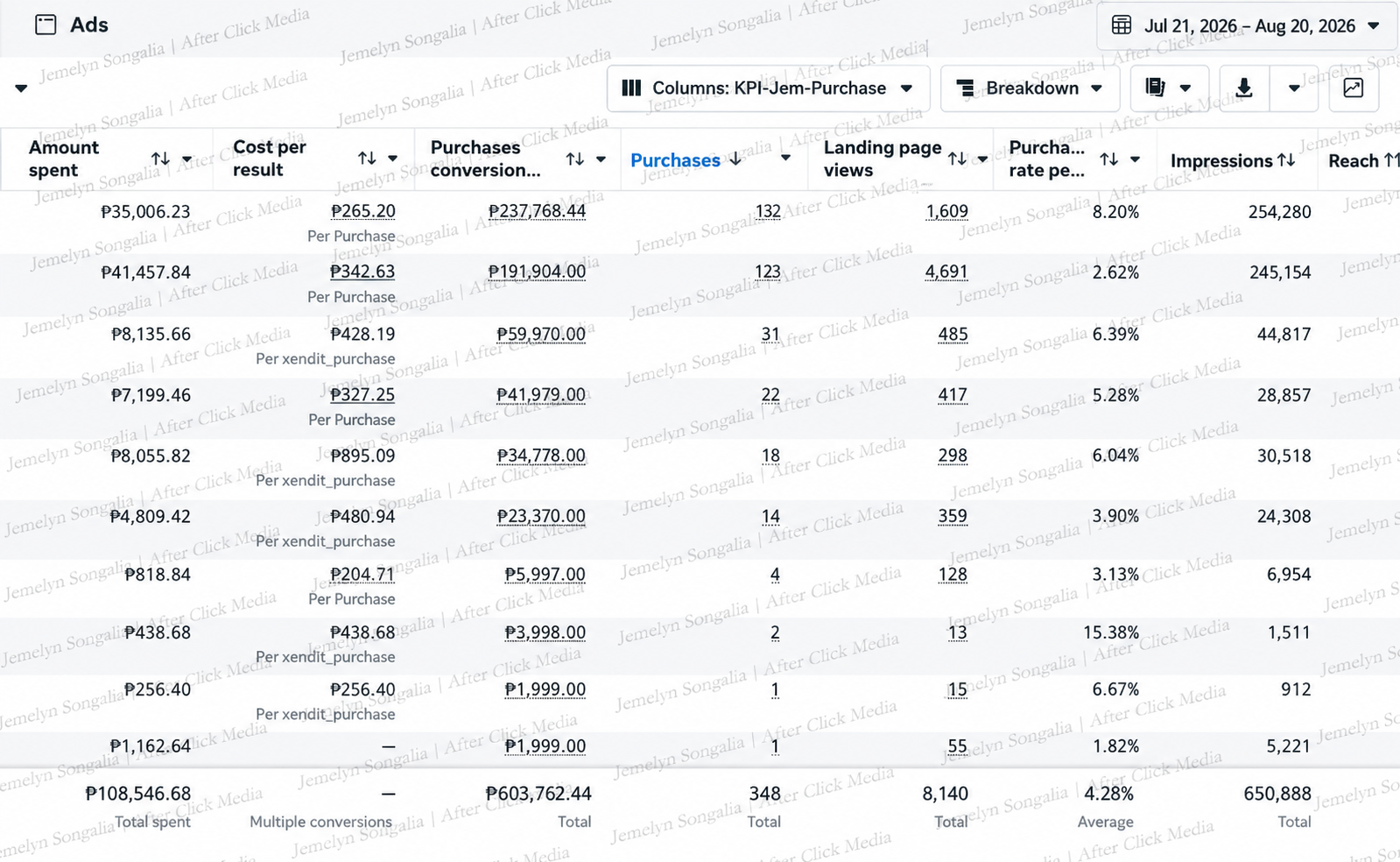
Verified Campaign Results
Final purchase data reconciled against client-side records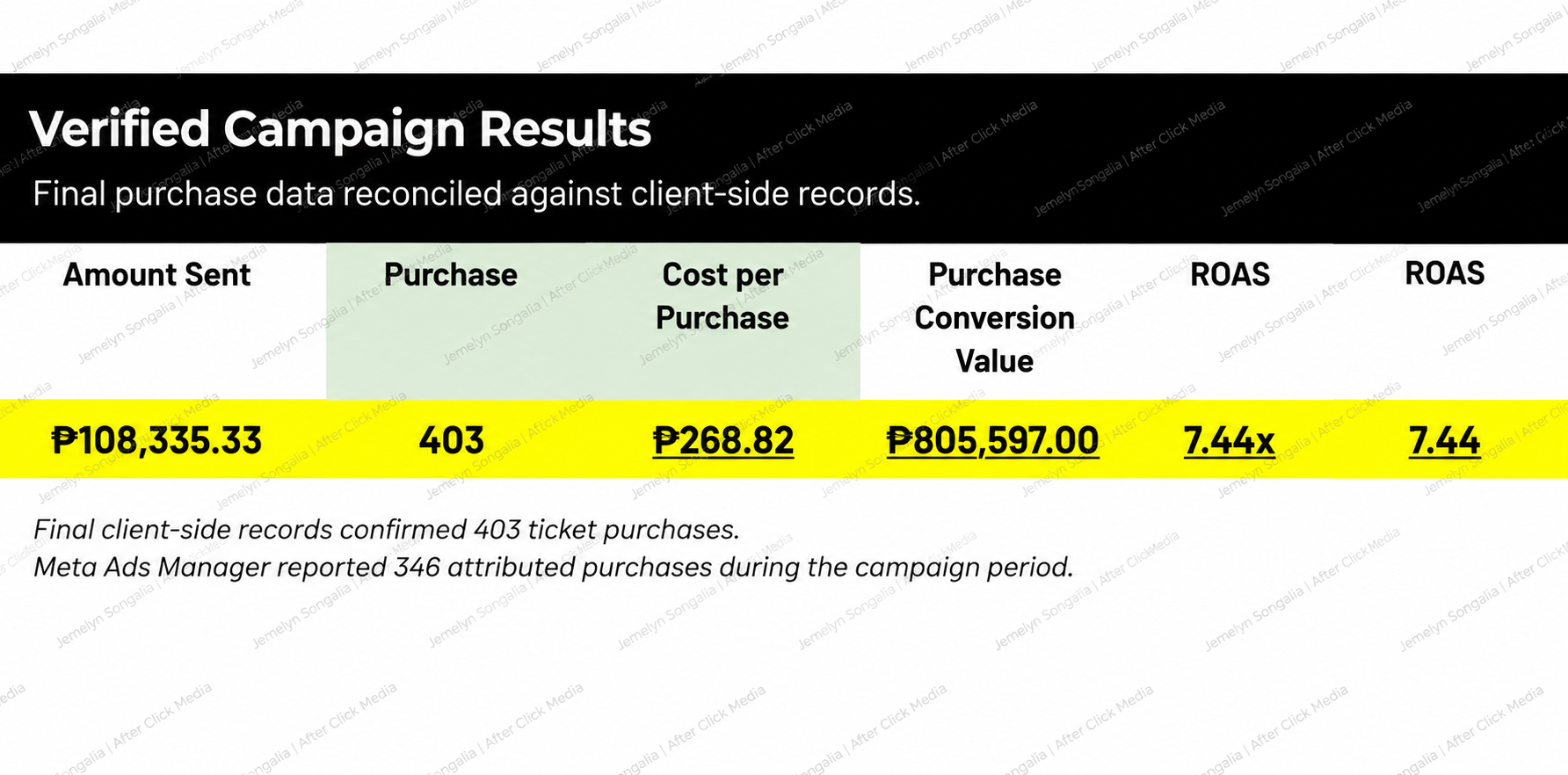
The campaign was designed to create value beyond the ticket sale.
Direct revenue mattered, but the strategic objective also included reaching managers, leaders, executives, and people who lead people — the kind of audience that could create future corporate speaking opportunities.
"I'm really happy and grateful we get to work with you again. You're competent and easy to work with — thank you!"
— Global Speaker, Author & Leadership EducatorMore traffic wasn't the answer — until the funnel was ready for it.
Early in the campaign, the biggest opportunity was improving what happened after the click. Once the sales page began converting, Meta Ads became the growth engine: testing audiences and creatives, identifying winners, scaling what worked, and using retargeting and new creative iterations to capture more demand.
The final result came from both sides working together: a conversion-ready customer journey + disciplined ad testing and scaling.
Book a Discovery Call →